

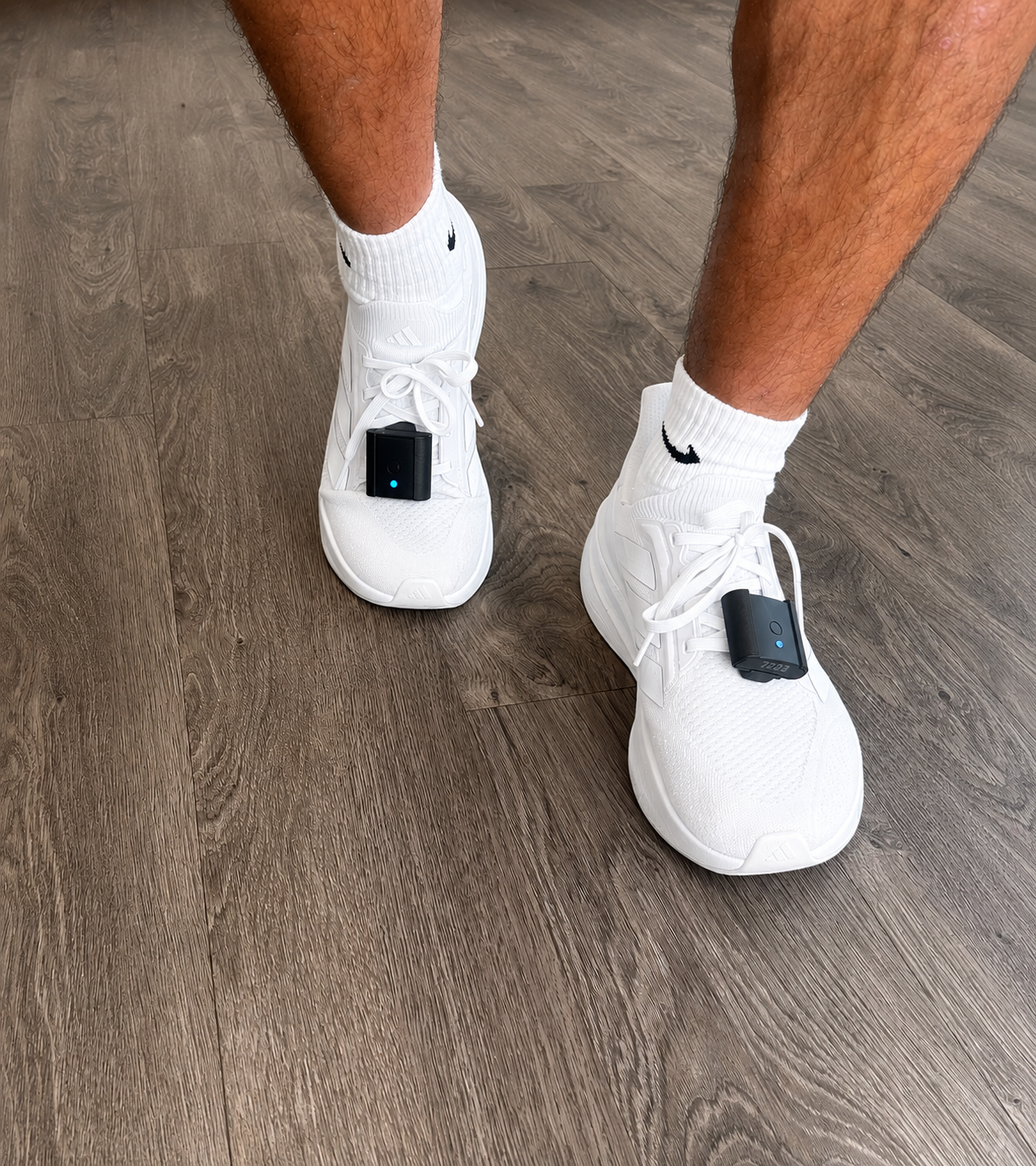
LEVEL Wearable Motion Sensors
LEVEL Sensors are wearable inertial measurement unit (IMU) sensors that measure human movement.
Worn on the body, they measure acceleration and angular velocity. Researchers can use this data to study how different parts of the body move during walking, balance tasks and other movements.
Connect the sensors wirelessly to a compatible smartphone or computer to collect movement data in clinical, research or real-world settings.
Use one sensor to measure movement at a specific body location or multiple sensors to study movement across the body.

Made for Clinicians and Researchers
LEVEL Sensors support research and assessment involving gait, balance, rehabilitation, fall risk and human movement.
Collect data from one body location or record movement across multiple body segments. Use the data to study movement patterns, compare results and track changes over time.
-
Single-Sensor Use
Measure movement at one body location for a focused assessment or research task. A single sensor can be useful when you want to study a specific movement without setting up a full-body system.
-
Multi-Sensor Use
Use multiple sensors to measure movement across different parts of the body. Synchronized recordings let researchers study gait, balance, coordination and movement between body segments without relying on a fixed camera-based motion capture setup.
Click Here for Sensor Datasheet

Research-Grade Movement Outside The Lab
Traditional optical motion capture systems often use cameras and markers in a dedicated laboratory. LEVEL Sensors use wearable IMU technology to measure movement without requiring a fixed camera setup.
LEVEL supports wireless data collection, synchronized multi-sensor recordings and access to raw movement data for further analysis.
This gives research teams a portable option for studying human movement in laboratories, clinics and other environments.