

Parkinson’s Disease
Supporting Movement Research and Care
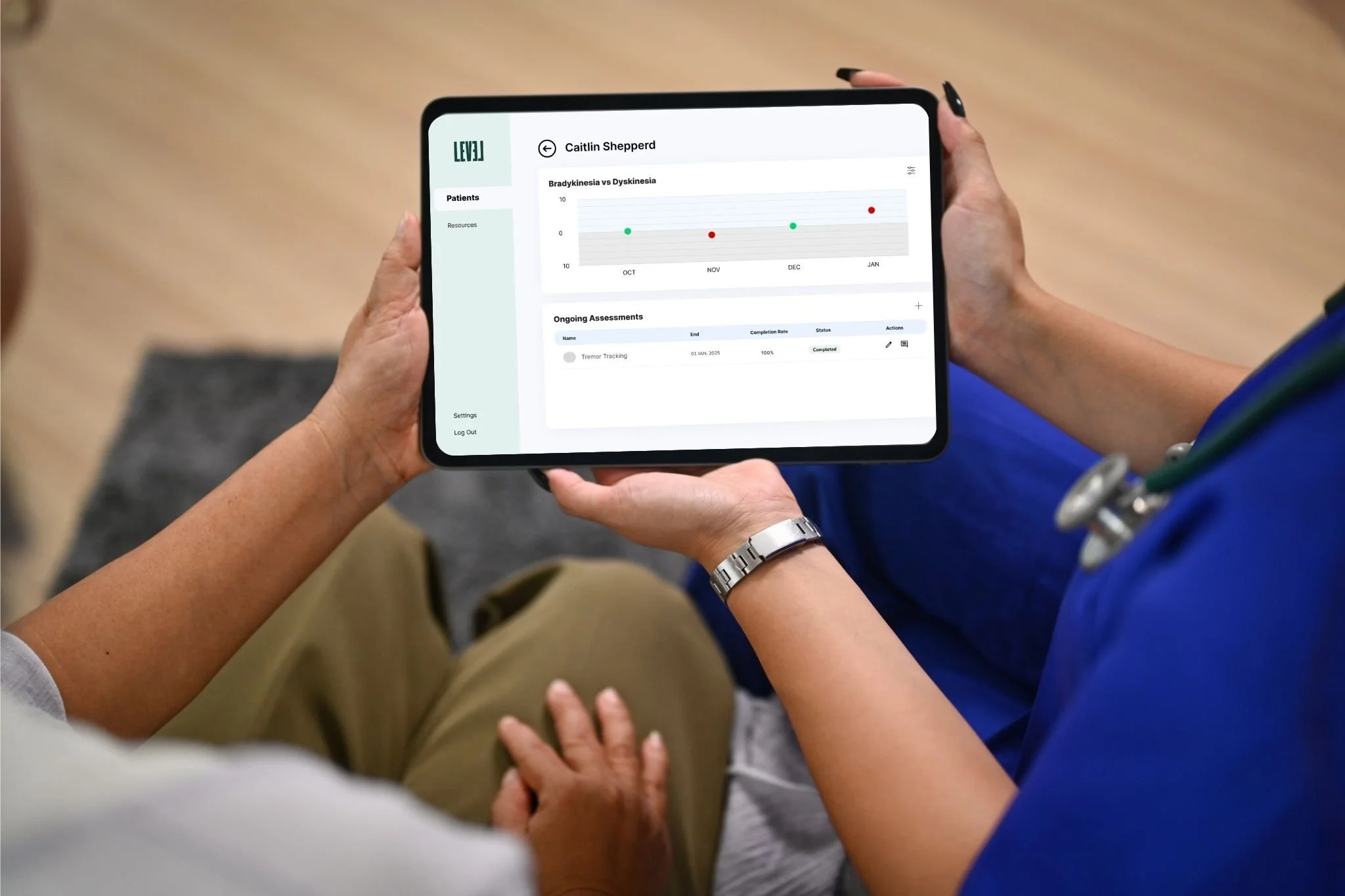
Our sensors and mobile app help clinicians and researchers understand movement changes in people living with Parkinson’s disease. By measuring gait, balance, posture and fine motor movements, our system provides objective insight that complements traditional observation and clinical assessments.
How LEVEL Helps
Our sensors or phone app detect hand tremors and subtle changes in movement, helping clinicians monitor the effects of medication and identify emerging symptoms. After medication, our system can record any unusual or increasingly frequent tremors or motor fluctuations, giving healthcare providers actionable information to adjust treatment plans. This continuous, objective monitoring allows clinicians to track progression over time, personalize care and intervene earlier when symptoms change.
Our sensors are lightweight, low-profile and easy to wear, allowing patients to move naturally during assessments or daily activity. Data is collected seamlessly, providing a more accurate picture of movement function than brief or artificial evaluations.